

The Art of Engaging Website Content: A Copywriting Guide for Small Businesses
1. Introduction of Art of Engaging Website Content
Your website might look fantastic, but great design is only half the job. If your words fail to capture attention, explain what you offer and give visitors a reason to take action, even the best-looking website can struggle to generate enquiries.
For small businesses, effective website copy is particularly important. You often have only a few seconds to convince a potential customer that they are in the right place. Your content needs to be clear, useful and persuasive without sounding forced.
At Cheap Websites UK, we understand that creating website content can feel like a challenge. What should you say? How much should you write? Where should you place your keywords? Most importantly, how do you turn visitors into customers?
In this guide, we’ll explore some practical copywriting techniques that can help you create website content people actually want to read.
2. Understand Your Audience Before You Start Writing with The Art of Engaging Website Content
One of the biggest mistakes businesses make is writing about themselves rather than writing for their customers.
Your visitors are usually not interested in a long list of everything your business does. They want to know one thing:
“Can you solve my problem?”
Before writing a page, think about your ideal customer and what they are looking for.
Ask yourself:
- What problem are they trying to solve?
- What questions are they likely to have?
- What concerns might stop them from buying?
- What benefits are most important to them?
- What would make them choose your business over a competitor?
Once you understand your audience, your writing becomes much more focused.
For example, instead of saying:
“We provide professional website design services for businesses.”
You could say:
“Need a professional website without a huge agency bill? We create affordable websites designed to help small businesses look credible and attract more customers.”
The second version immediately speaks to a specific customer and addresses a likely concern.
Art of Engaging Website Content

3. Write Headlines That Make People Want to Continue
Your headline is one of the first things a visitor sees, so it needs to earn their attention.
A weak headline simply describes a service. A strong headline communicates a benefit, solves a problem or creates curiosity.
For example:
Weak:
“Website Design Services”
Stronger:
“Affordable Websites That Help Your Business Get Noticed Online”
When creating headlines, focus on clarity rather than trying to sound clever.
Good headlines often:
- Highlight a specific benefit
- Address a customer problem
- Use clear and straightforward language
- Create curiosity
- Include relevant keywords naturally
- Tell the reader what they can expect
If you’re targeting searches such as “cheap website design UK” or “affordable website design”, don’t force the keyword into every sentence. Use it naturally where it genuinely helps explain the page.
4. Make Your Opening Paragraph Count
Once someone has clicked on your page, the introduction needs to keep them there.
Avoid beginning with several paragraphs about your company’s history unless that information is genuinely important.
Instead, get to the point.
Identify the customer’s problem, introduce your solution and give them a reason to continue reading.
For example:
“Starting a business is expensive enough without spending thousands on a website. At Cheap Websites UK, we help small businesses get online with professionally designed websites at prices that make sense.”
The reader immediately understands who the service is for, what the problem is and what the business offers.
That’s what your opening should achieve.
Art of Engaging Website Content
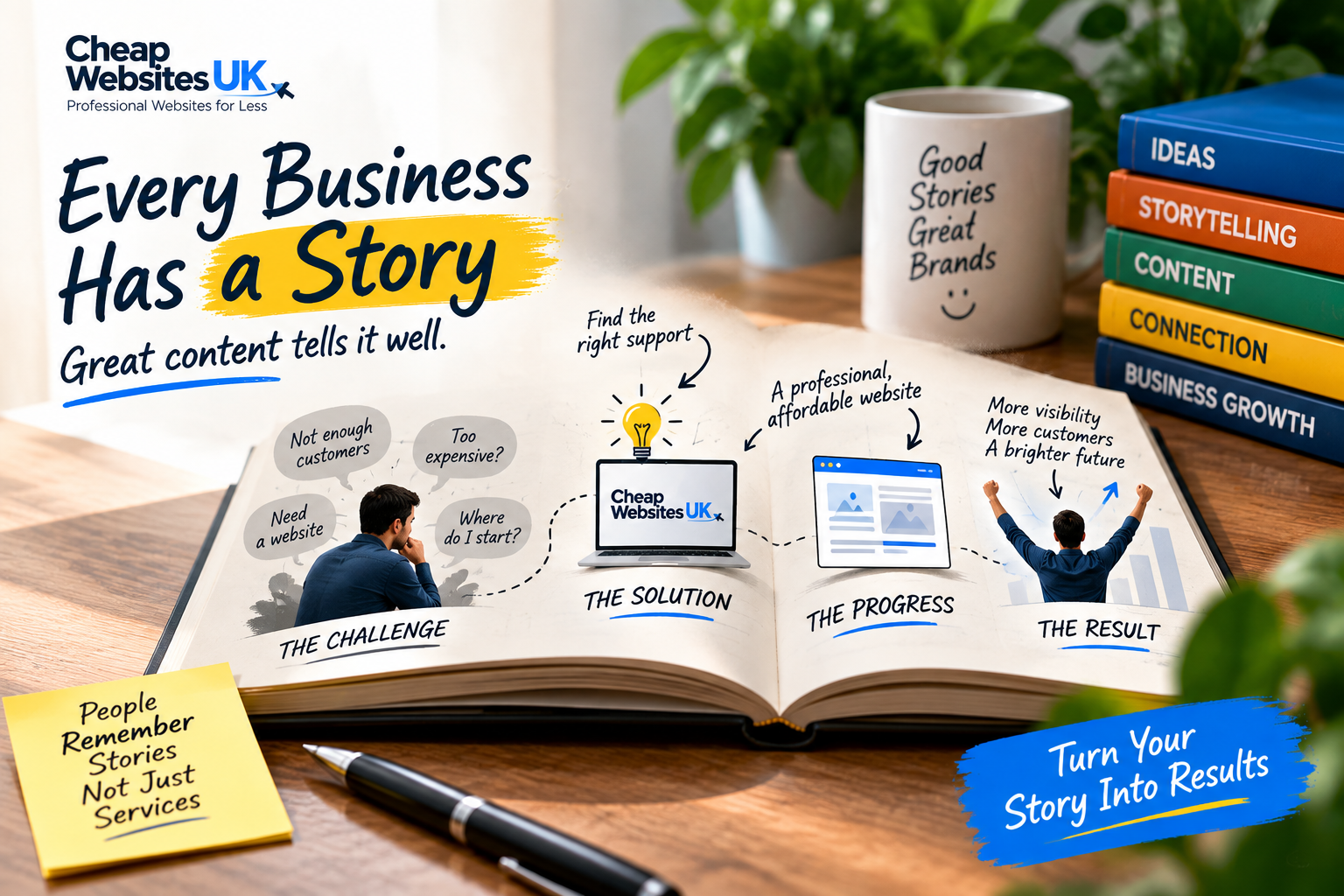
5. Use Storytelling to Make Your Content More Memorable
Facts and features are useful, but stories can make your message much more relatable.
Imagine a local business owner who has been relying entirely on Facebook to attract customers. Their business is growing, but potential customers keep asking for a website. They know they need one, but they are worried about expensive agency fees and complicated technical processes.
That’s a story many small business owners can recognise.
Your website copy can use situations like this to show customers that you understand their challenges.
Storytelling can help you:
- Make complicated ideas easier to understand
- Demonstrate your experience
- Create an emotional connection
- Make your brand feel more human
- Help customers recognise themselves in your content
You don’t need to write a novel. Even a short, realistic example can make a service page considerably more engaging.
6. Focus on Benefits, Not Just Features
Features explain what your product or service includes. Benefits explain why the customer should care.
For example:
Feature:
“Mobile-responsive website.”
Benefit:
“Your website will look and work properly on phones, tablets and desktops, so customers can browse your business wherever they are.”
The feature tells the visitor what they get. The benefit explains what it means for them.
Whenever you mention a feature, ask yourself:
“So what does this actually do for my customer?”
That question can dramatically improve your copy.
7. Make Your Content Easy to Read
People rarely read website pages from beginning to end. Most visitors scan the page looking for information that matters to them.
That means formatting is just as important as the words themselves.
Make your content easier to scan by using:
- Short paragraphs
- Descriptive headings
- Bullet points
- Numbered lists
- Bold emphasis where appropriate
- Plenty of white space
- Clear calls to action
- Simple sentence structures
Avoid filling a page with huge blocks of text.
A visitor should be able to quickly understand what the page is about simply by scanning the headings.
This also helps search engines understand the structure and subject of your content.
8. Write Naturally While Keeping SEO in Mind
SEO and good copywriting should work together.
Your website needs relevant keywords so search engines can understand what your pages are about. However, repeatedly forcing the same keyword into your copy can make your writing awkward and difficult to read.
Instead, focus on the topic as a whole.
If you’re writing about affordable website design, your content might naturally discuss:
- Website design costs
- Small business websites
- Responsive web design
- Website development
- WordPress websites
- Website maintenance
- Professional website design
- Online business presence
Use keywords where they make sense, but always prioritise the person reading the page.
A useful rule is simple:
Write for people first and optimise for search engines second.
Art of Engaging Website Content
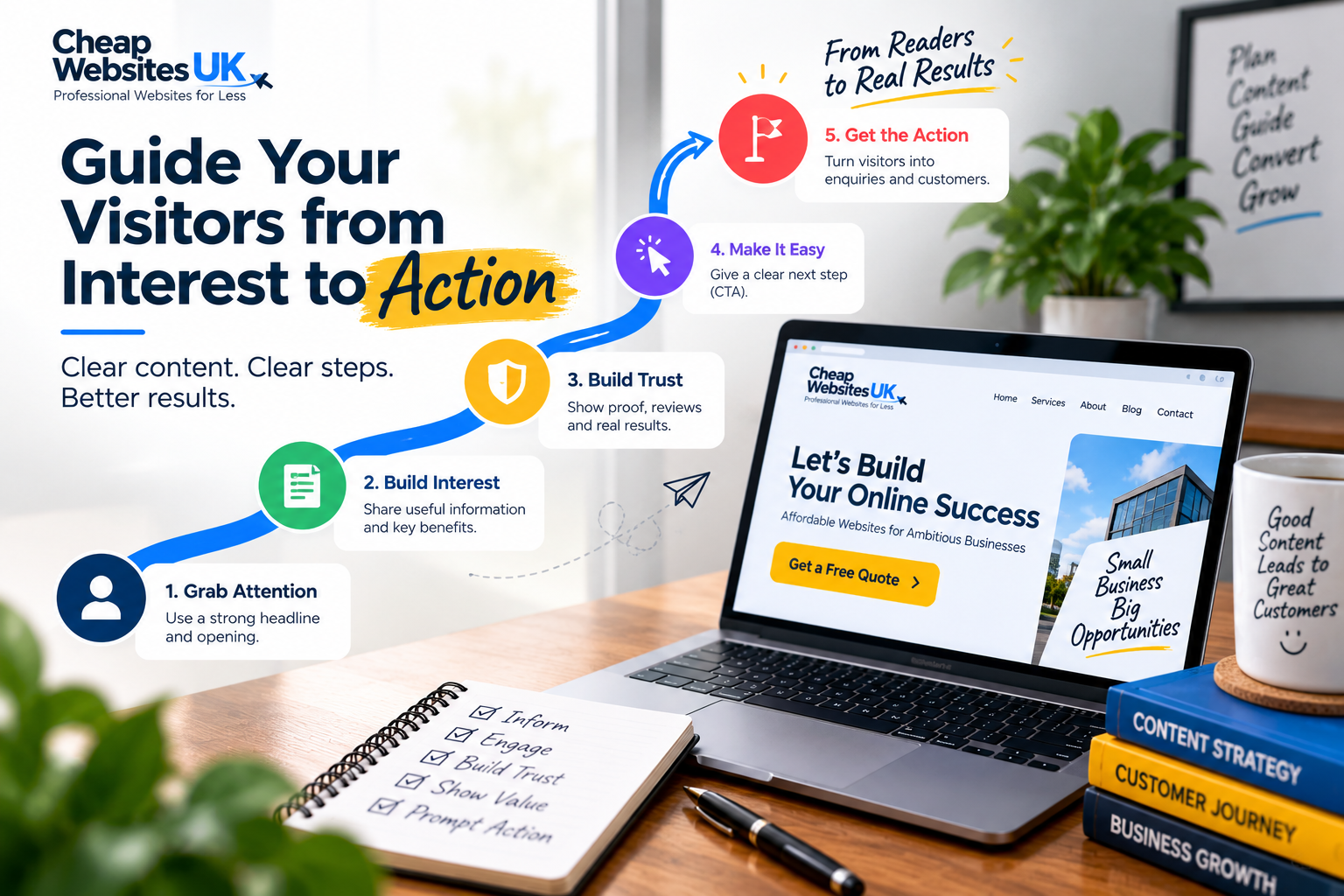
9. Keep Your Reader Moving Towards Action
Good website content shouldn’t leave visitors wondering what to do next.
Every important page should guide the reader towards a logical next step.
Depending on your business, that could be:
- Requesting a quote
- Booking a consultation
- Calling your team
- Sending an enquiry
- Viewing your portfolio
- Starting a project
- Contacting you for more information
Your call to action doesn’t need to be complicated.
Instead of:
“Submit”
try something more specific:
“Get Your Free Website Quote”
Or:
“Let’s Build Your Website”
The best CTA is clear about what happens when the visitor clicks.
10. Build Trust Throughout Your Content
People don’t buy from businesses they don’t trust.
Your website copy should therefore give visitors reasons to feel confident about choosing you.
Depending on your business, you could include:
- Customer reviews
- Testimonials
- Case studies
- Portfolio examples
- Industry experience
- Guarantees
- Transparent pricing
- Frequently asked questions
- Clear contact information
Don’t simply tell visitors that you’re trustworthy. Show them evidence.
For example, rather than writing:
“We provide excellent customer service.”
Explain what that means:
“From your first enquiry to the launch of your website, our team is available to answer questions and help keep your project moving.”
Specific information is much more convincing than generic claims.
11. Don’t Be Afraid to Sound Human
Website copy doesn’t have to sound like a corporate brochure.
In fact, overly formal writing can make a small business feel distant.
Write the way you would speak to a potential customer.
That doesn’t mean filling your website with slang or informal language. It means choosing words that are natural, clear and easy to understand.
Instead of:
“Utilise our comprehensive digital solutions to facilitate the enhancement of your online presence.”
Say:
“We create affordable websites that help your business look professional online.”
The second version is easier to understand and says exactly what the customer needs to know.
12. Give Visitors a Reason to Choose You
Your website should answer another important question:
“Why should I choose your business?”
There are thousands of businesses competing for attention online, so your website needs to communicate what makes you different.
Perhaps you offer affordable pricing. Maybe you specialise in small businesses. Perhaps your process is simple, your support is personal or your websites are built around specific business goals.
Whatever your advantage is, make it clear.
Don’t make visitors search through five pages to discover why your business is worth considering.
Tell them early.
13. Review and Improve Your Copy
Writing your website copy isn’t necessarily a one-time job.
Once your website is live, pay attention to how people interact with it.
Look at the Art of Engaging Website Content:
- Which pages receive the most traffic
- Where visitors leave
- Which calls to action receive clicks
- Which services generate enquiries
- What questions customers regularly ask
- Which search terms bring visitors to your website
This information can help you improve your content over time.
Sometimes changing a headline, rewriting an introduction or making a CTA clearer can make a significant difference.
Good website copy is rarely perfect on the first attempt. The best websites continue to improve.
14. Conclusion – The Art of Engaging Website Content
Art of Engaging Website Content isn’t about using complicated words or writing enormous amounts of text.
It’s about understanding your customers, communicating your value clearly and giving visitors the information they need to make a decision.
Start with your audience. Address their problems. Explain the benefits of your services. Make your content easy to scan. Use SEO naturally, build trust and always give visitors a clear next step.
Most importantly, remember that your website isn’t really about your business.
It’s about the person visiting it.
If your content can answer their questions, solve their problems and make them feel confident about contacting you, you’re already on the right track.
And if writing website content isn’t your thing, that’s okay too. At Cheap Websites UK, we can help you create a professional website with content that is designed to communicate your services clearly and turn visitors into potential customers.
Ready for a Better Website? with the Art of Engaging Website Content
Whether you’re launching a new business, replacing an outdated website or simply looking for a more affordable way to get online, Cheap Websites UK can help.
Let’s build a website that works for your business with the Art of Engaging Website Content.


